Smuggler’s Beat live-video policy
The Edge of the WorldSmuggler’s Beat live-video policy rests on a contrast between the band’s preferred form of performance and the camera’s presence: Shay trusts the live stage, but regards television as a medium that can distort the band’s sound. The evidence does not set out a comprehensive ban or a list of recording rules; instead, it shows how live performance, documentary filming, and the handling of private material are kept distinct.
The live stage and mediated performance
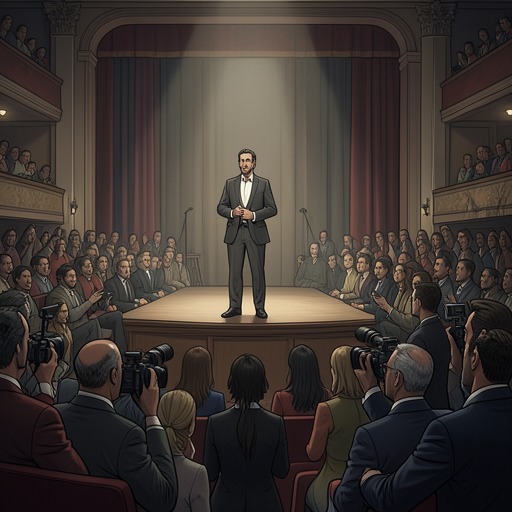
Shay draws a firm line between playing live and appearing on television. For him, the stage is where Smuggler’s Beat sounds good; television, by contrast, “fucks everything up.” His objection is therefore framed around what mediation does to the band’s sound, not as a rejection of performing before an audience. When Corina asks why he accepts the stage but dislikes television, he insists that the two situations are not equivalent.
That preference is reinforced by Shay’s preparation for the band’s first Dublin show. After the seven-hour journey, he follows his private pre-gig routine and makes a solitary circuit of the unfamiliar stage. He later lies on it with his eyes closed, imagining the lights going down and the sold-out crowd’s response. The venue’s imperfect backstage conditions—the cramped dressing room and the cluttered corridors—do not diminish the stage’s importance to him. Live performance is not simply another appearance to be captured; it is the setting in which he anticipates the band’s sound and the audience’s reaction directly.
A performance that changes from night to night
The band’s live practice also resists treating a show as a repeatable product. At the Belfast encore, Shay refuses the cajon and decides that he must play something new. His bandmates recognize that he is about to go off-script and leave room to join him if he signals. He lifts a harmonica without knowing in advance what will emerge, and the resulting melody gives expression to a feeling he cannot put into words. The no-repeat practice makes the concert an occasion for immediate invention, rather than a fixed performance whose defining feature is its reproduction.
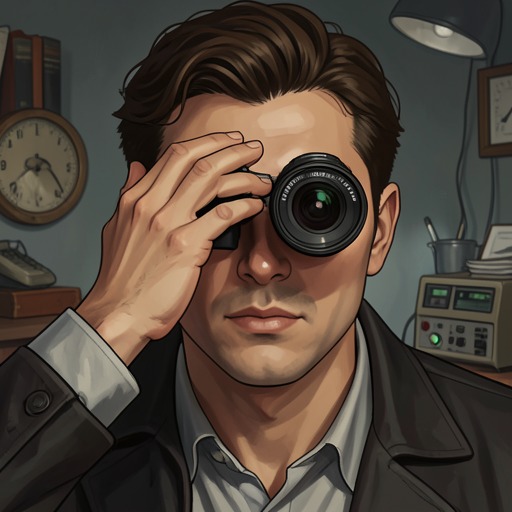
The distinction between live sound and its capture appears again in Southampton. Ollie watches the band from the back of the venue, where Ben is on his phone, Jumbo seems asleep, Mara plays Rachmaninov at the piano, and Larry taps a beat unrelated to her music. Ollie wishes he had brought video equipment, but he has his still camera; through its lens he watches Shay play the penny whistle. The scene shows filming as a selective act of observation, while Shay’s music remains something unfolding in the room, not a performance shown to be governed by a camera.
Documentary filming and boundaries
The tour documentary operates under a separate arrangement. Corina tells Shay that he must sign a nondisclosure agreement between him and Sky, under which the researcher will not report what he sees on tour. She also explains that the researcher will join the tour and film as it proceeds. The agreement establishes confidentiality around the material gathered; it is not presented as a prohibition on filming the band’s live sets.
Ollie makes the filming process more specific when he prepares to record a conversation with Shay. He says the first portion will be their discussion, that he will later take panning shots while Shay reviews what has been explained to him, and that he will edit out the preceding material. Shay asks whether the earlier conversation will appear in the documentary; Ollie says it will not and offers to signal when recording has properly begun. The exchange distinguishes private discussion from material intended for the film, and makes editing part of how that boundary is maintained.
Consent and the limits of the camera
The camera’s presence is not treated as overriding a person’s wishes. At the grave, when Shay wants to hear a painful family story, Ollie offers to turn the camera off and go somewhere else. The offer makes clear that documentary access can be withdrawn in a moment of personal vulnerability; recording is not framed as an entitlement merely because the researcher is on the tour.
Taken together, these moments define the policy through practice rather than exhaustive written instructions. The live show is valued for its sound, immediacy, and capacity for invention; television is viewed with suspicion, while documentary filming is bounded by confidentiality, editing choices, and attention to whether Shay is ready to be recorded. The distinction preserves a space between performing for an audience and exposing private experience to a camera.